AI, Ethics and Society
Course Description
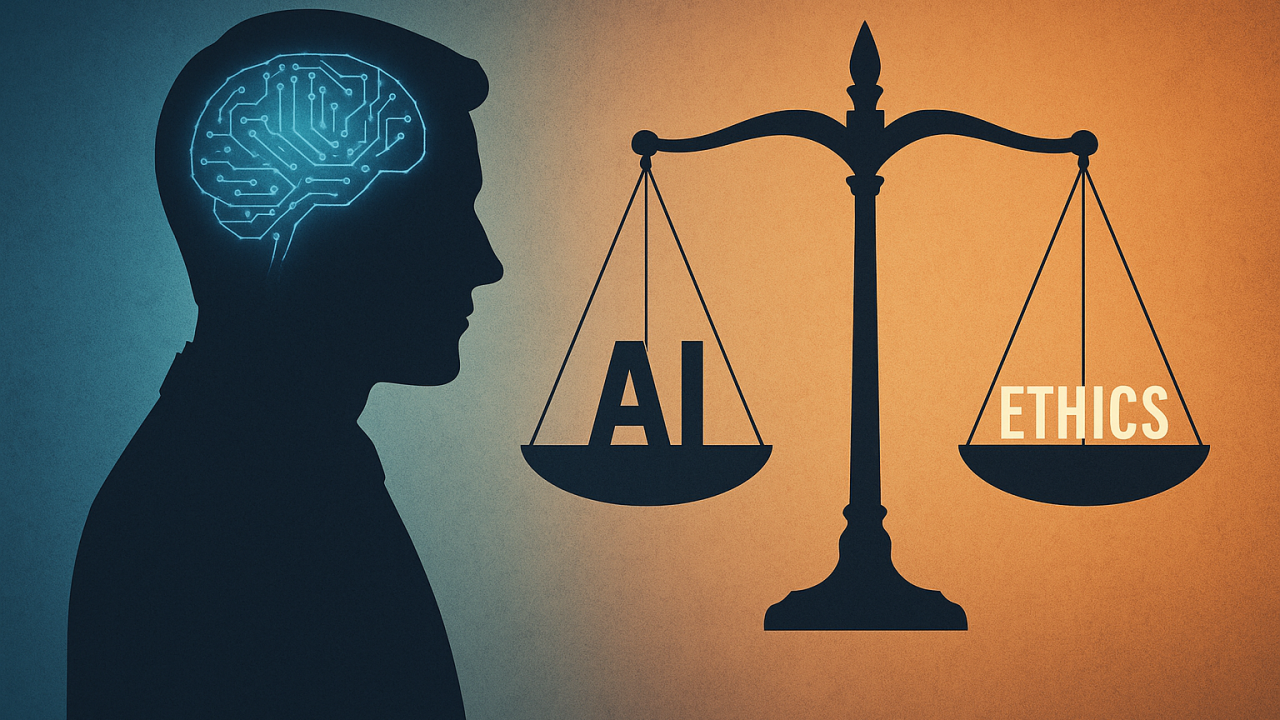
Every AI system is built on choices from what to optimize for, whose needs to prioritize, and what tradeoffs are worth making. This course explores the rapidly evolving role of artificial intelligence (AI) in modern life, examining how those choices intersect with fundamental societal values like justice, freedom, and human welfare.
Drawing on ideas from Computer Science and Science and Technology Studies (STS), students will analyze how AI-powered systems operate across a range of real-world contexts, and how the goals to which these systems are directed can both amplify and diminish the power and agency of different communities and social groups. This course is designed to attract students from across the university (no matter your major). If you live in the modern world, these questions are yours to grapple with.
Faculty Spotlight

Farzana Rashid, Ph.D. – Assistant Professor, Computer Science
Academic background
Dr. Farzana Rashid holds a Bachelor of Science in Computer Science from the University of North Texas and a Master of Science in Bioinformatics and Systems Biology from Chalmers University of Technology in Sweden. She also earned a PhD in Computer Science and Engineering from the University of North Texas, with a concentration in Natural Language Processing (NLP), a prominent field in AI. Besides NLP, her research interests include Computational Sociology, Sociolinguistics, Bioinformatics and Machine Learning.
What makes this course meaningful for students?
AI-mediated systems (e.g., search engines, Internet platforms, chatbots, decision-support tools) shape our personal, social, and political lives in increasingly complex and consequential ways – providing tremendous benefits (e.g. convenient access to information, connecting to one another across time and space) and harms (e.g. biased decision-making, mass surveillance, disinformation campaigns) that are important to examine and understand. At the same time, these tools and artifacts are also shaped by society – meaning that they come into existence within particular social, cultural, political contexts; and reflect the priorities, beliefs, values, and goals of their makers. Thus, grappling with the ethical dimensions of computer-mediated technologies requires an understanding of how computation (e.g., hardware, data, networks, algorithms) and society (e.g., values, ideologies, and design decisions) influence one another.
In this course, students will explore this interplay by examining how various technologies work “under the hood,” some of the benefits and harms of these technologies (for different people in different situations), how and why these technologies were created in the first place, and how and to what ends they are used. By taking this course, students will be in a better position to understand how tools like ChatGPT, search engines, data trackers, etc. function – both on a technical level and on a societal level. Students will also be pushed to think outside their own unique situation to consider how people with different identities, subject positions, and histories of experience might reap the rewards or suffer the costs of these technological “innovations” differently. Finally, they will consider how different forms of action – design, law and policy, educational opportunities, artistic works, and so forth – might work to create a more just technologically-mediated society going forward.
Favorite spot in Asheville
Dr. Rashid loves to eat at Mehfil Restaurant and loves to hang out with friends and family and play board games.